
Maryam Nawaz E Bikes Portal
Meta Description: Learn how the Maryam Nawaz E Bikes Portal works, who can apply, eligibility requirements, registration steps, and important tips for Punjab students.
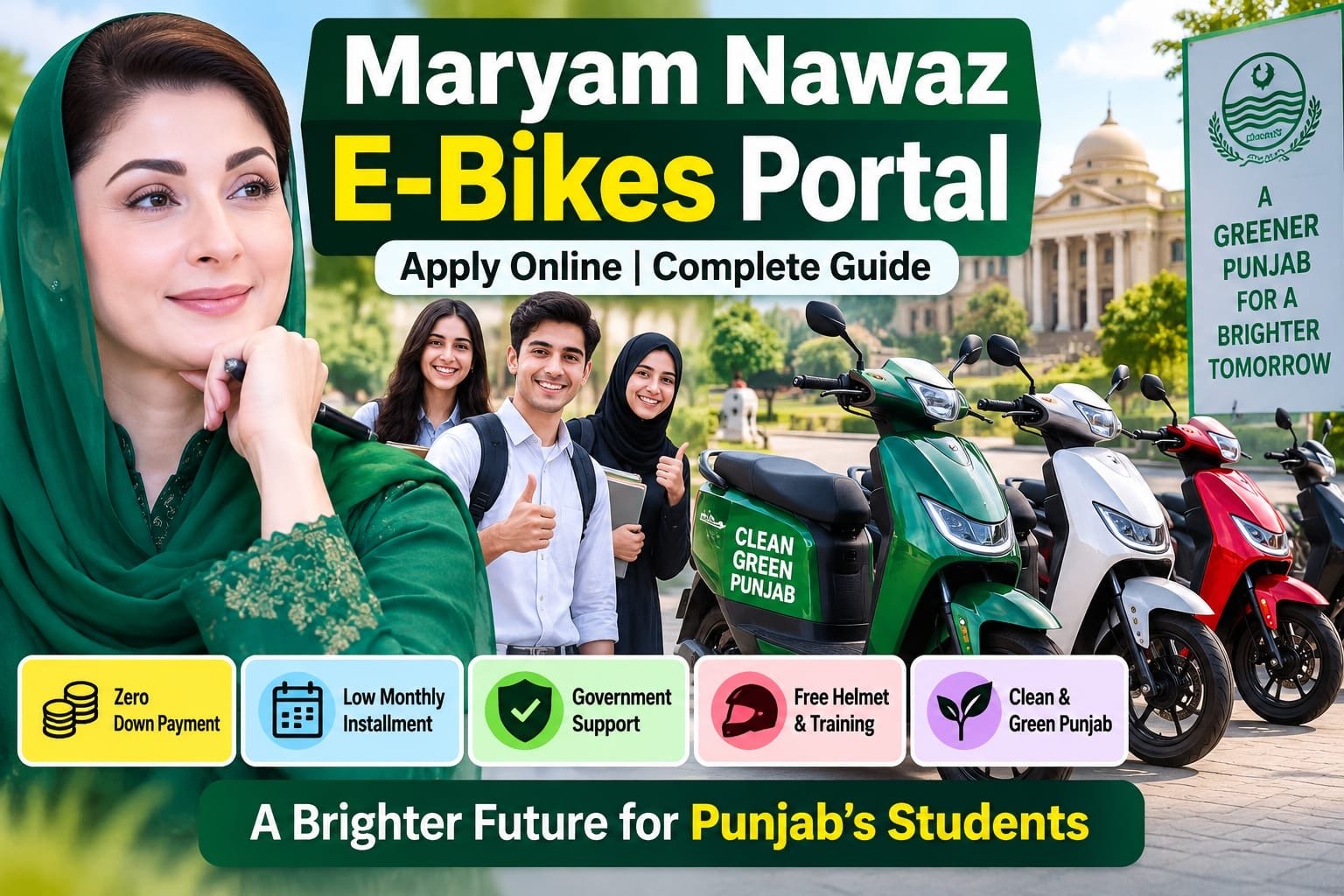
The Maryam Nawaz E Bikes Portal has attracted significant attention from students across Punjab looking for an affordable and environmentally friendly way to travel to college or university. The initiative, introduced under the Punjab government’s student-focused transport programs, aims to make two-wheel transportation more accessible while encouraging cleaner mobility.
In March 2024, the Punjab government announced a plan to provide 19,000 petrol bikes and 1,000 electric bikes to students through an interest-free financing arrangement. Later, in December 2024, Chief Minister Maryam Nawaz announced a much larger plan involving 100,000 electric bikes for students in Punjab.
If you are searching for the Maryam Nawaz E Bikes Portal, understanding the application process, eligibility criteria, and official sources is essential.
What Is the Maryam Nawaz E Bikes Scheme?
The Maryam Nawaz electric bike initiative is designed to improve transportation options for students, particularly those who face difficulties commuting to educational institutions.
Electric bikes can offer several advantages over conventional motorcycles. They generally have lower running costs, produce no tailpipe emissions, and can be particularly useful for daily urban commuting.
The broader program reflects Punjab’s efforts to introduce more sustainable transportation while supporting students financially. The government’s announcements have also emphasized expanding the number of electric bikes available to students over time.
Maryam Nawaz E Bikes Portal: How Does It Work?
A dedicated online application process allows eligible applicants to provide their information and participate in the scheme according to the government’s announced requirements.
Because government portals and application procedures can change, applicants should rely on official Punjab government channels rather than social-media posts or unofficial websites. The official Punjab Portal provides access to government services and information. (Punjab Government)
When an application portal is open, applicants should generally be prepared to provide information such as:
- CNIC or identity details
- Student information
- Educational institution details
- Contact information
- Residential information
- Any documents specifically requested during registration
Always check the current application instructions before submitting information.
Who Can Apply for the E-Bike Scheme?
The scheme is primarily aimed at students in Punjab. However, exact eligibility requirements can vary depending on the phase of the program and the government’s latest announcement.
Potential applicants should check requirements relating to:
Student Status
Applicants may need to be enrolled in a recognized college or university in Punjab.
Age and Identity Requirements
A valid CNIC or other officially requested identification may be required. Applicants should enter their details exactly as they appear on official documents.
Residence and Institution
Some phases may include requirements concerning Punjab residency or enrollment in an eligible educational institution.
Verification
Applications may be checked against institutional or government records. Providing inaccurate information can create problems during verification.
How to Apply Through the E-Bikes Portal
If applications are open, the process can generally be approached in the following way:
- Visit the official Punjab government source and locate the current e-bike scheme information.
- Create or access your application using the information requested by the portal.
- Enter your personal and student details carefully.
- Upload required documents, if requested.
- Review your application before submitting it.
- Save your application or tracking information for future reference.
- Monitor official announcements for verification, balloting, approval, or delivery updates.
Do not pay anyone who claims they can guarantee approval. Government schemes involving large numbers of applicants can have formal verification or selection procedures.
Important Tips for Applicants
Before using the Maryam Nawaz E Bikes Portal, keep your CNIC, student information, mobile number, and relevant educational records readily available.
Also, be cautious about websites promising “instant approval,” asking for unnecessary fees, or requesting sensitive information through WhatsApp or unofficial forms. Start from the official Punjab government website whenever possible.
The Punjab government has increasingly used digital platforms to deliver public services, making it particularly important to distinguish genuine government portals from copycat websites.
Why Electric Bikes Matter for Students
For students who regularly travel between home and campus, an electric bike can potentially reduce transportation expenses and provide greater independence. It can also contribute to cleaner urban mobility because electric motorcycles do not produce direct exhaust emissions while operating.
For Punjab’s growing student population, affordable transportation can make a meaningful difference in daily commuting.
Conclusion
The Maryam Nawaz E Bikes Portal represents an important part of Punjab’s efforts to improve student transportation and encourage electric mobility. With announcements ranging from an initial allocation of electric bikes to a much larger proposed rollout, the program has become a major point of interest for students.
Click here for Maryam nawaz e bike portal
If you plan to apply, the smartest approach is simple: check the latest official Punjab government announcement, confirm your eligibility, submit accurate information, and avoid unofficial agents or websites. As the scheme develops, official updates should remain your primary source for application dates, eligibility rules, selection procedures, and distribution details.